We participate in affiliate programs, including Amazon Associates, and may earn commissions from qualifying purchases at no extra cost to you.
Smart Switch Setup Guide
Table of Contents
ToggleDo Smart Switches Need a Neutral Wire?
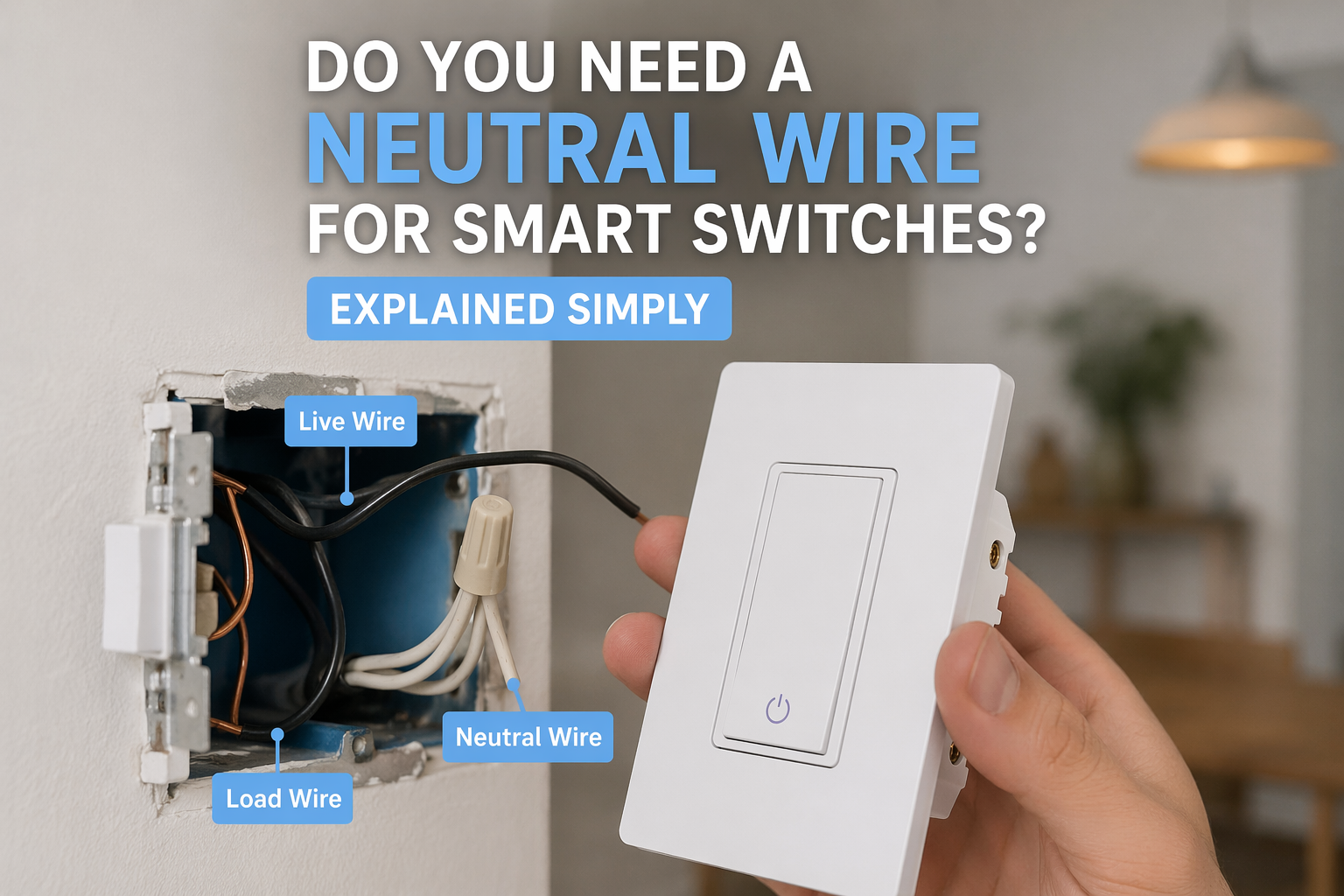
Neutral wire for smart switches is one of the most important things to understand before installing a smart switch in your home.
Updated May 2026 • Reviewed by Smart Home Guide Editors
Reviewed By Smart Home Guide Editors
Smart Switch Installation Review Team
Guide reviewed for wiring accuracy, beginner-friendliness, installation safety, and compatibility with modern smart switches.
Neutral wire for smart switches is one of the first things to understand before buying or installing a smart switch.
If you are planning to upgrade your lighting, you have probably come across the term neutral wire for smart switches and wondered whether your home actually needs one.
The short answer is: it depends on your home's wiring and the type of smart switch you choose.
In this Smart Guide, we explain what a neutral wire does, whether smart switches need one, how to check your wiring safely, and what alternatives exist if your home does not include a neutral wire.
If you already know your home does not have a neutral wire, our guide to best smart switches without neutral wire covers the top renter-friendly and older-home options available right now.
Quick Answer: Neutral Wire for Smart Switches
No — not all smart switches need a neutral wire.
However, many popular smart switches do require one because they need constant power to stay connected to Wi-Fi, voice assistants, and automation systems.
If your home does not have a neutral wire for smart switches, you can still use:
- No-neutral smart switches
- Smart bulbs
- Wireless smart lighting systems
What Is a Neutral Wire for Smart Switches?
A neutral wire is part of your home's electrical system that carries unused electricity back to the electrical panel.
In traditional light switch setups, the switch simply interrupts power to turn lights on and off, so constant power is not necessary.
Smart switches are different because they usually need continuous power to support:
- Wi-Fi connectivity
- Voice assistant control
- App access
- Automation and scheduling
That is why many smart switches require a neutral wire for smart switches to work properly.
Do Smart Switches Need a Neutral Wire for Smart Switches?
This is one of the most searched smart home installation questions today.
The answer depends on the specific switch model and your home's wiring.
| Switch Type | Neutral Wire Needed? | Typical Use Case |
|---|---|---|
| Standard smart switches | Usually yes | Modern homes |
| No-neutral smart switches | No | Older homes |
| Smart bulbs | No | Renters & apartments |
If your home includes a neutral wire for smart switches, you will generally have access to:
- More smart switch models
- Better stability
- More advanced automation features
- Wider smart assistant compatibility
For most newer homes, this is not usually a problem.
What Happens If You Don’t Have a Neutral Wire?
Many older homes built before the 1980s do not include neutral wires inside switch boxes.
That does not mean you cannot use smart lighting.
You still have several good alternatives:
- Install a smart switch designed specifically for no-neutral wiring
- Use smart bulbs instead of switches
- Use smart plugs with lamps
- Choose wireless smart lighting systems
For renters especially, smart bulbs are often the easier option because they avoid electrical installation entirely.
If you are comparing switches and bulbs, our smart switch vs smart bulb guide explains the pros and cons of each setup.
How to Check If You Have a Neutral Wire
If you are unsure whether your home includes a neutral wire, here is the simplest way to check safely.
Basic Neutral Wire Check
- Turn off power at the breaker
- Remove the light switch cover plate
- Carefully inspect the electrical box
If you see multiple white wires bundled together in the back of the box, you likely have a neutral wire.
If there are no white wire bundles visible, your switch setup may not include one.
If you are uncomfortable working with electrical wiring, it is always safer to contact a licensed electrician.
Why Some Smart Switches Work Without a Neutral Wire
No-neutral smart switches use alternative methods to maintain enough power for connectivity even when the light is turned off.
However, these switches sometimes come with limitations such as:
- Reduced compatibility with certain bulbs
- Occasional flickering
- Fewer advanced features
That said, many modern no-neutral switches now work surprisingly well for apartments and older homes.
Pros and Cons of Neutral Wire Smart Switches
Pros
- More smart switch options available
- Better reliability and Wi-Fi stability
- Supports advanced automation
- Improved smart assistant compatibility
Cons
- Older homes may not include neutral wires
- Installation may require an electrician
- Some switch boxes may be too crowded
Best Setup for Beginners
For most beginners, the easiest path depends entirely on the home's wiring.
| Your Situation | Recommended Option |
|---|---|
| Home has neutral wire | Standard smart switch |
| No neutral wire available | No-neutral smart switch |
| Apartment or rental | Smart bulbs or smart plugs |
Keeping the setup simple usually avoids unnecessary installation frustration.
If you are looking for beginner-friendly switch recommendations, our guide to best smart light switches for Alexa and Google Home covers some of the easiest options to install.
Why Trust Smart Home Guide
Smart Home Guide focuses on practical smart home recommendations for beginners, renters, and homeowners building simple and reliable smart home setups.
Our setup guides prioritize real-world usability, installation simplicity, compatibility, and beginner-friendly explanations instead of overly technical language.
Frequently Asked Questions
Can I install a smart switch without a neutral wire?
Yes. Several smart switches are designed specifically for homes without neutral wires.
How do I know if my house has a neutral wire?
Look for bundled white wires inside the switch box after safely turning off power.
Do older homes usually have neutral wires?
Many older homes do not include neutral wires inside light switch boxes.
Are no-neutral smart switches reliable?
Modern no-neutral smart switches have improved significantly and now work well in many homes.
Final Thoughts
Understanding neutral wire for smart switches is one of the most important steps before buying a smart switch.
While many smart switches still require a neutral wire, newer no-neutral options now make smart lighting possible even in older homes and apartments.
The key is simply choosing the right setup for your wiring situation.
If your home does not include a neutral wire, our guide to best smart switches without neutral wire can help you find the safest and easiest options available today.
Best Smart Switches Comparison
| Product | Neutral Wire | Voice Control | Best For | Check Price |
|---|---|---|---|---|
| Lutron Caseta Smart Switch | No | Alexa, Google, Apple Home | No-neutral homes | Check Price |
| Kasa Smart Light Switch (HS200) | Yes | Alexa, Google | Budget option | Check Price |
| Leviton Decora Smart Switch | Yes | Alexa, Google | Premium features | Check Price |
| GE Cync Smart Switch | No | Alexa, Google | No-neutral alternative | Check Price |