Smart Home Security
Table of Contents
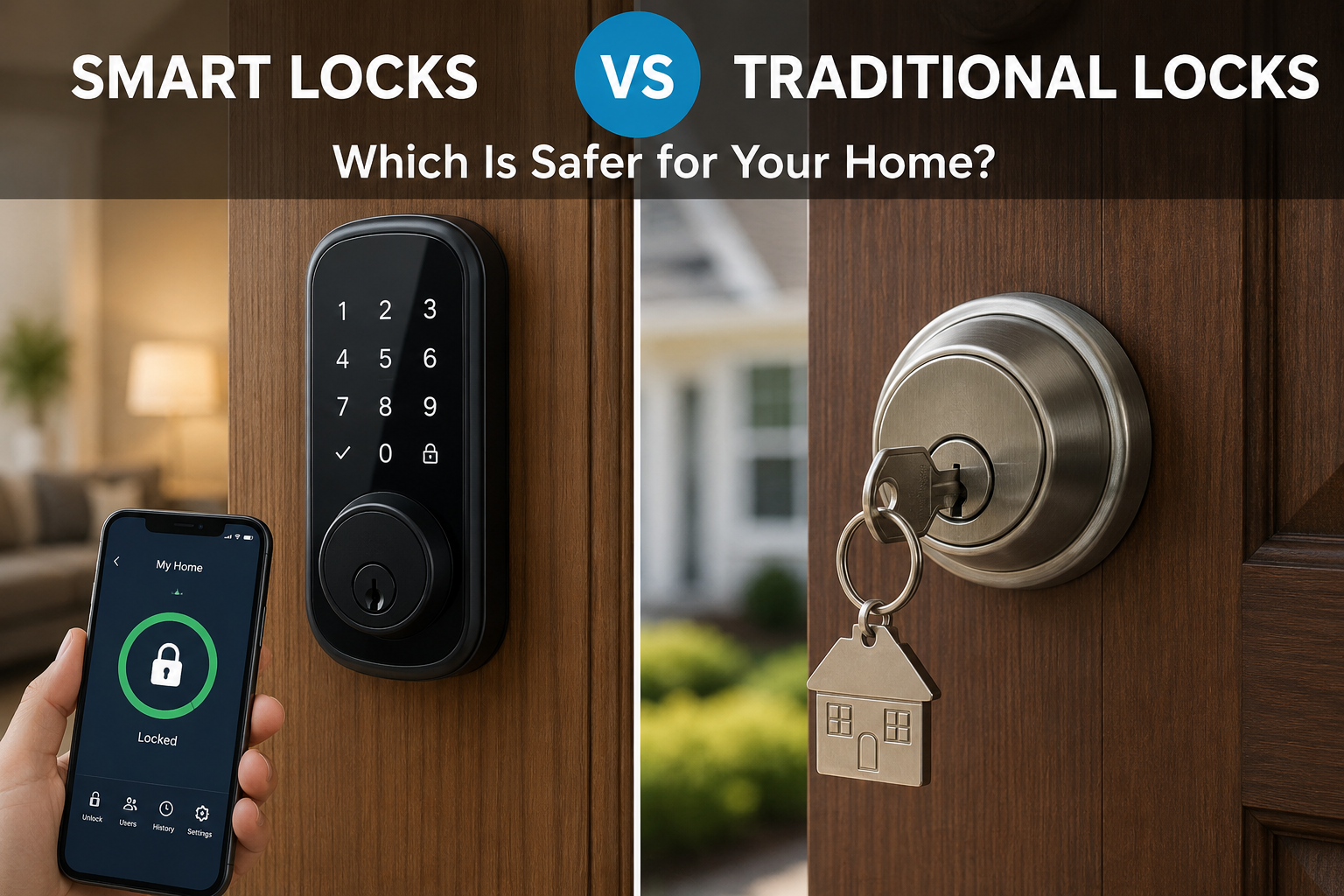
ToggleSmart Locks vs Traditional Locks: Which Is Safer? (Smart Guide)
Smart locks and traditional locks both secure homes differently, but modern homeowners now prioritize convenience, remote access, automation, and long-term home security flexibility.
Updated May 2026 • Reviewed by Smart Home Guide Editors
Reviewed By Smart Home Guide Editors
Smart Security Review Team
Smart locks and traditional locks evaluated for convenience, physical security, smart-home compatibility, reliability, installation difficulty, and long-term usability.
The debate around smart locks vs traditional locks has grown significantly as more homeowners adopt connected smart-home technology.
Traditional deadbolt locks have protected homes for decades and remain popular because they are simple, dependable, and do not rely on apps, WiFi connections, or batteries.
At the same time, smart locks now offer remote access, smartphone controls, temporary guest codes, automation routines, and activity notifications that traditional locks cannot provide.
The biggest question for most homeowners is whether smart locks are actually safer or if traditional deadbolts still offer better overall protection.
If you are considering upgrading your current setup, exploring smart locks for apartments can help you understand what modern smart-lock systems now offer for renters and homeowners.
Quick Comparison
- Best For Convenience: Smart Locks
- Best For Simple Reliability: Traditional Locks
- Best For Smart Home Automation: Smart Locks
- Best For Low Maintenance: Traditional Locks
Smart Locks vs Traditional Locks Comparison
| Feature | Smart Locks | Traditional Locks |
|---|---|---|
| Remote Access | Yes | No |
| Physical Keys | Optional | Required |
| Smart-Home Integration | Yes | No |
| Battery Requirement | Yes | No |
| Installation Simplicity | Moderate | Simple |
How We Compared Smart Locks and Traditional Locks
We compared both lock types based on physical security, convenience, remote access, installation difficulty, reliability, smart-home integration, and overall long-term usability.
Both smart locks and traditional deadbolts were evaluated using realistic everyday home-security situations instead of only technical specifications.
Why Many Homeowners Prefer Smart Locks
Convenience & Remote Access
One of the biggest reasons homeowners switch to smart locks is convenience. Being able to lock or unlock doors remotely from a smartphone becomes extremely useful in daily life.
Many smart locks also support auto-locking schedules and remote activity monitoring for additional peace of mind.
- Remote smartphone controls
- Auto-locking support
- Activity notifications
- Remote access management
Guest Access & Automation
Smart locks simplify guest management because homeowners can create temporary codes for family members, visitors, deliveries, or service providers without sharing physical keys.
For connected smart homes, smart locks can also integrate with cameras, hubs, and automation routines.
- Temporary guest codes
- Smart-home integration
- Connected automation routines
- App-based access management
For users building connected front-door security systems, combining smart locks with video doorbells without monthly fees can improve overall home-entry monitoring and connected security alerts.
Why Some Homeowners Still Prefer Traditional Locks
Traditional deadbolt locks remain trusted because they are simple, dependable, and completely independent from internet connections, smartphone apps, or battery systems.
Many homeowners still prefer traditional locks because they do not require software updates, internet connectivity, or battery replacements.
Some users also feel more comfortable relying on purely physical security systems instead of internet-connected smart devices.
Although smart-lock hacking receives attention online, most real-world home break-ins still happen through weak doors, unsecured windows, or poor overall home-security setups rather than advanced lock hacking.
A high-quality traditional deadbolt installed correctly still provides strong physical home protection for many households.
- No batteries required
- No internet dependency
- Simple long-term operation
- Lower upfront pricing
- Reliable physical protection
Are Smart Locks Actually Safe?
Modern smart locks are generally very safe when purchased from trusted brands and installed correctly.
Most quality smart locks now use encrypted connections, secure smartphone apps, firmware protections, and two-factor authentication to improve security.
In many situations, weak passwords and poor WiFi security habits create larger risks than the smart-lock hardware itself.
Adding outdoor monitoring systems like outdoor security cameras for home security can also strengthen overall home protection beyond the front door itself.
Homeowners using smart locks should still:
- Use strong app passwords
- Enable two-factor authentication
- Keep firmware updated
- Choose trusted lock brands
- Secure home WiFi networks
What to Consider Before Choosing
Convenience vs Simplicity
Smart locks are ideal for homeowners who value automation and remote access, while traditional locks appeal more to users who prefer simplicity and low maintenance.
Smart-Home Compatibility
Smart locks work best when integrated with hubs, cameras, smart doorbells, and connected automation systems.
Battery Maintenance
Most smart locks run on batteries that typically last several months before replacement becomes necessary.
Installation Difficulty
Many smart locks install over existing deadbolts, although some homeowners may still prefer professional installation assistance.
Security Features
Features like tamper alerts, remote notifications, auto-locking, and activity logs improve visibility and connected security management.
Why Trust Smart Home Guide
We focus on practical smart-home products that improve convenience, security, automation, and realistic everyday usability.
We compare smart-security devices based on installation simplicity, compatibility, reliability, smart features, pricing, and long-term value for homeowners and renters.
How We Evaluate Smart Security Products
We focus on real-world smart-home usability instead of only technical specifications or marketing claims.
We evaluate smart-security products based on setup simplicity, reliability, automation quality, app performance, compatibility, and overall long-term usability.
Frequently Asked Questions
Are smart locks safer than traditional locks?
Quality smart locks are generally very safe and include additional security features like activity alerts, remote access, and auto-locking.
Can smart locks be hacked?
Modern smart locks use strong encryption and security protections that make hacking extremely difficult for average criminals.
Do smart locks work during power outages?
Most smart locks run on batteries, so they continue working during power outages.
Are traditional locks still reliable?
Yes. Properly installed high-quality deadbolt locks remain one of the most reliable forms of physical home security.
Final Verdict
When comparing smart locks vs traditional locks, neither option is automatically unsafe. The better choice usually depends on lifestyle preferences, convenience needs, and overall home-security priorities.
Traditional deadbolts still provide strong physical protection, while smart locks add automation, remote access, and connected smart-home functionality that many homeowners now prefer.
For users building complete connected security systems, smart locks often provide the strongest balance between convenience and modern smart-home protection.
If you are exploring more apartment-friendly smart-security upgrades, checking out smart cameras for apartments with no drilling can help strengthen your overall smart-home security setup.
Explore Smart Lock OptionsAccording to the Cybersecurity & Infrastructure Security Agency (CISA) , securing your home network is one of the most important steps for protecting connected smart-home devices like smart locks, cameras, and video doorbells from unauthorized access.