We participate in affiliate programs, including Amazon Associates, and may earn commissions from qualifying purchases at no extra cost to you.
Smart Bedroom Comfort
Table of Contents
ToggleBest Smart Air Purifiers for Bedrooms (Quiet & Powerful) – Smart Guide
Quiet smart air purifiers help improve bedroom air quality while reducing allergens, odors, smoke particles, and nighttime noise disruption.
Updated May 2026 • Reviewed by Smart Home Guide Editors
Reviewed By Smart Home Guide Editors
Smart Air Quality Review Team
Air purifiers reviewed for filtration strength, bedroom noise levels, app quality, air-quality automation, maintenance requirements, and long-term comfort.
The best smart air purifiers for bedrooms help create cleaner indoor air by reducing allergens, dust, smoke particles, pet dander, and odors that can affect sleep quality and overall comfort.
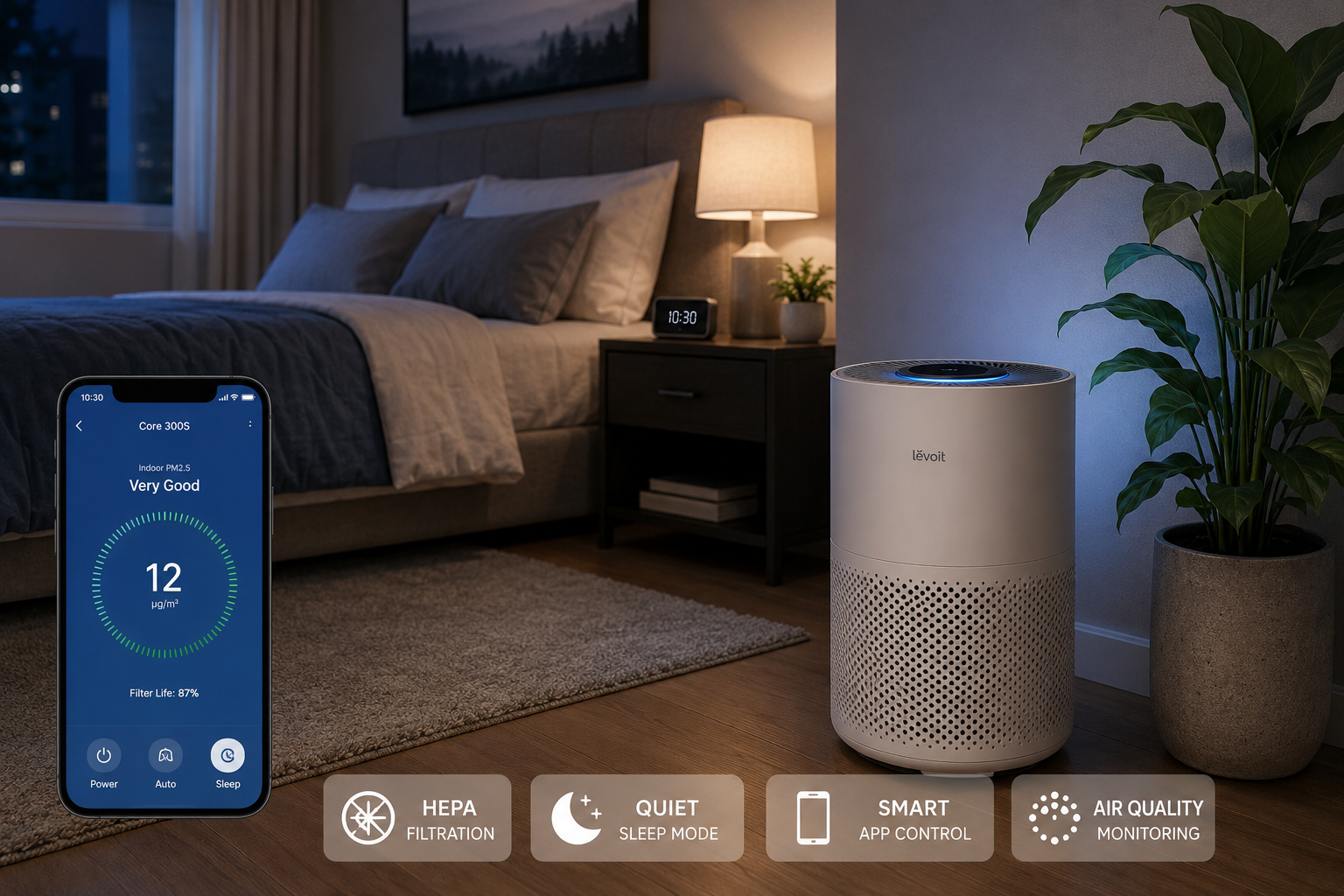
Many modern smart purifiers now include app controls, automatic fan adjustments, sleep modes, and real-time air quality monitoring designed specifically for bedrooms and quiet living spaces.
For people with allergies, pets, or poor indoor airflow, a good bedroom air purifier can make a noticeable difference in overall air freshness and nighttime comfort.
If you want a more automated bedroom setup, you can also pair your purifier with smart plugs with energy monitoring to automate schedules and better manage energy usage.
Quick Picks
- Best Overall: Levoit Core 300S
- Best for Allergies: Coway Airmega AP-1512HH
- Best for Larger Bedrooms: Blueair Blue Pure 311i+
- Best Quiet Option: Levoit Core 300S
Smart Air Purifier Comparison
| Air Purifier | Best For | Key Features |
|---|---|---|
| Levoit Core 300S | Best overall | HEPA filter, quiet sleep mode, smart controls |
| Coway Airmega AP-1512HH | Best for allergies | Strong filtration, eco mode, air sensors |
| Blueair Blue Pure 311i+ | Best for large bedrooms | Strong airflow, smart monitoring, quiet operation |
Best Smart Air Purifiers for Bedrooms
Levoit Core 300S — Best Overall
The Levoit Core 300S remains one of the most balanced bedroom air purifiers because it combines strong filtration, smart app controls, and very quiet nighttime operation.
Its compact design also works especially well for apartments, smaller bedrooms, and desk-side placement.
Best Uses
- Bedrooms
- Quiet sleeping environments
- Pet owners
- Everyday air purification
Why People Like It
- Quiet sleep mode
- Reliable app controls
- Compact footprint
- Strong HEPA filtration
Coway Airmega AP-1512HH
Coway’s Airmega purifier is highly rated for allergy support because of its strong filtration system and automatic air-quality monitoring.
The eco mode also helps balance performance and energy efficiency throughout the day.
Best Uses
- Allergy sufferers
- Pet dander reduction
- Bedrooms with poor airflow
- Long daily runtime
Key Advantages
- Strong filtration performance
- Air-quality sensors
- Good odor reduction
- Energy-saving eco mode
Blueair Blue Pure 311i+
The Blueair Blue Pure 311i+ is designed for stronger airflow and larger room coverage while still maintaining relatively quiet operation.
It works especially well in larger bedrooms, open layouts, or spaces with heavier dust or smoke exposure.
Best Uses
- Large bedrooms
- Open room layouts
- High airflow needs
- Continuous purification
What Stands Out
- Excellent room coverage
- Quiet airflow system
- Smart monitoring support
- Modern minimalist design
Why Trust Smart Home Guide
Smart Home Guide focuses on practical smart-home products that improve everyday comfort, energy efficiency, and indoor living quality.
We compare smart air purifiers based on filtration quality, noise performance, room coverage, automation features, maintenance costs, and real-world bedroom usability instead of relying only on advertised specifications.
Benefits of Smart Air Purifiers
Smart air purifiers help remove airborne particles such as pollen, dust, smoke, pet dander, and odors that affect indoor air quality.
Automatic fan adjustment is one of the most useful smart features because it responds to changing air conditions without requiring constant manual control.
Quiet sleep modes are especially important for bedrooms because they allow overnight purification with minimal noise disruption.
What to Look for Before Buying
HEPA filtration is one of the most important features because it captures very small airborne particles commonly linked to allergies and poor indoor air quality.
Noise level matters heavily for bedroom use. Lower decibel ratings and dedicated sleep modes help maintain quieter nighttime operation.
Room coverage should also match your bedroom size. Larger rooms usually benefit from purifiers with stronger airflow ratings.
Replacement filter costs are another important long-term factor because filters require periodic maintenance depending on usage and air conditions.
Smart Air Purifiers vs Traditional Purifiers
Traditional air purifiers mainly rely on manual controls, while smart purifiers add automation, scheduling, app controls, and air-quality monitoring.
Smart features are especially useful for people who want more convenience and automated air management throughout the day.
Many smart models also help reduce energy usage by automatically lowering fan speeds when indoor air quality improves.
Frequently Asked Questions
Are smart air purifiers worth it?
Yes. Smart air purifiers improve convenience and automate indoor air management while helping maintain cleaner bedroom air.
Do air purifiers help with allergies?
Yes. HEPA filters help remove allergens such as pollen, dust, mold spores, and pet dander from indoor air.
Are smart air purifiers noisy?
Most modern bedroom air purifiers include quiet sleep modes designed specifically for nighttime use.
How often should filters be replaced?
Most filters require replacement every 6 to 12 months depending on air quality conditions and purifier usage.
Can air purifiers reduce pet odors?
Yes. Models with activated carbon filtration can help reduce pet odors, smoke smells, and cooking odors over time.
Final Verdict
The best smart air purifiers for bedrooms help improve indoor air quality, reduce allergens, and maintain quieter overnight comfort.
Levoit Core 300S is the strongest overall option for most bedrooms, Coway is excellent for allergies, and Blueair performs best in larger spaces that need stronger airflow.
Check Best Smart Air Purifier
1 thought on “Best Smart Air Purifiers for Bedrooms (Quiet & Powerful)”